
Why the NFT Market is Crashing and What Comes Next

Explore why the NFT market crashed, from speculation and oversupply to crypto volatility and regulation. Learn what caused the downturn, what utility-driven opportunities remain, and how digital ownership, gaming, and tokenization may shape the future of NFTs.
A few short years ago, digital artwork of cartoon apes and pixelated punks sold for millions of dollars. Celebrities updated their social media profiles with exclusive digital avatars, and major brands scrambled to launch their own digital collectables. The hype was deafening, and early investors saw unprecedented returns on their digital assets.
Now, the landscape looks drastically different. Trading volumes have plummeted across major marketplaces. Collections that once commanded astronomical prices are trading for a fraction of their peak value. Many retail investors who purchased digital tokens during the peak of the frenzy are now holding assets with little to no resale value.
This dramatic shift has left many observers wondering how a market that generated billions of dollars in trading volume could evaporate so quickly. The downturn is not simply a temporary dip; it represents a fundamental correction in how digital assets are valued and traded.
The Meteoric Rise of Digital Collectibles
To understand the crash, we must first look at the conditions that created the bubble. Non-fungible tokens offered a novel technological solution: verifiable digital scarcity. Before this technology, a digital image could be copied and saved infinitely, making it impossible to prove original ownership. The blockchain changed that by creating an immutable public ledger.
Artists finally had a way to monetize digital art directly. This technological breakthrough coincided with a massive influx of liquidity in the global economy. During the global pandemic, many people had disposable income and time spent mostly online. Cryptocurrency prices were surging, creating newly wealthy investors looking for places to park their digital capital.
Major auction houses like Christie’s and Sotheby’s legitimized the space by hosting high-profile auctions. When digital artist Beeple sold a single piece for $69 million, the market shifted into overdrive. Suddenly, thousands of new projects are launched daily, promising utility, community, and massive financial returns to their buyers.
Core Reasons Behind the NFT Market Crash
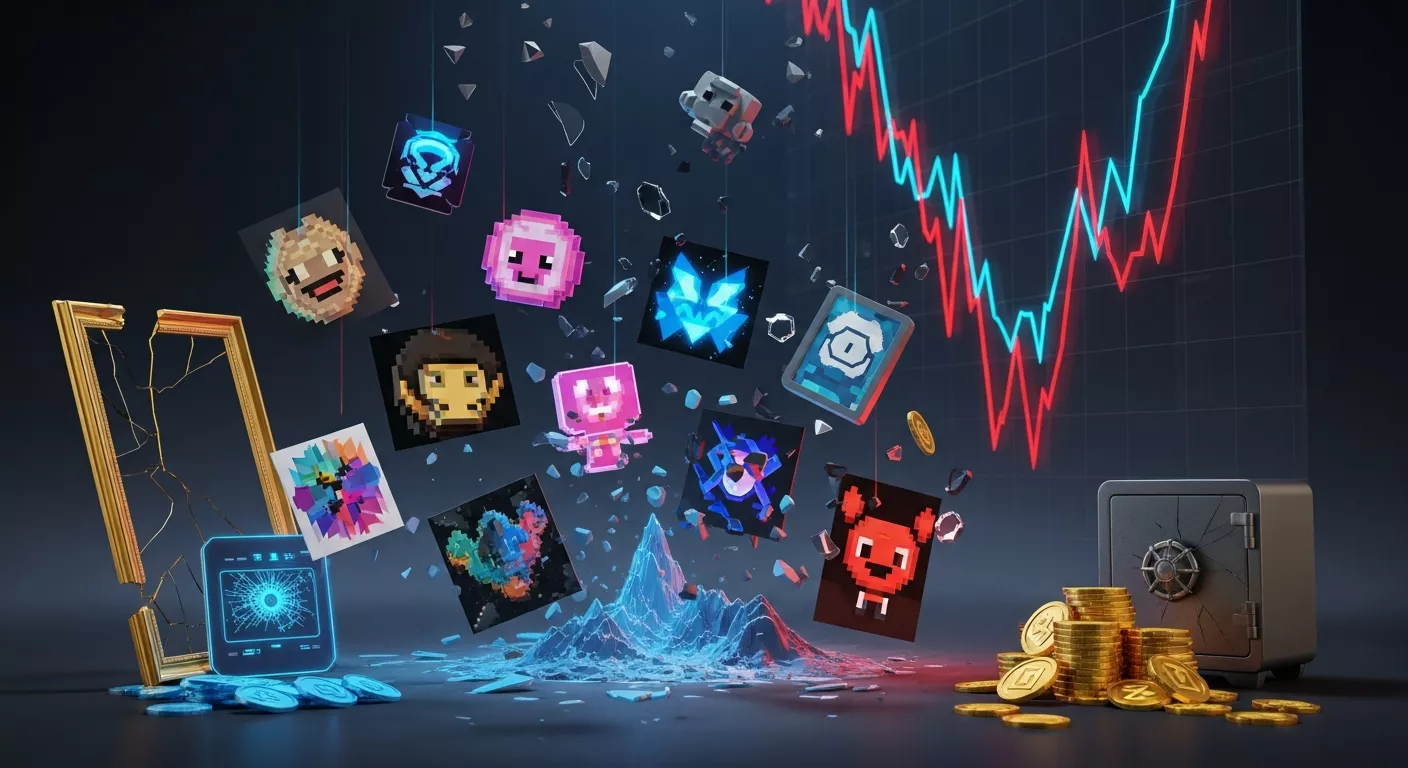
The collapse of this market was not caused by a single event. Instead, it was the result of several colliding factors that destroyed consumer confidence and drained liquidity from the ecosystem.
Cryptocurrency Market Volatility
Non-fungible tokens are inextricably linked to the broader cryptocurrency market. Most of these digital assets are bought and sold using Ethereum or Solana. When the values of these foundational cryptocurrencies started to drop, the fiat value of NFTs dropped concurrently.
As major crypto exchanges collapsed and regulatory scrutiny increased, investors pulled their capital out of the crypto ecosystem entirely. This “crypto winter” removed the foundational liquidity required to sustain high NFT prices. Investors facing massive losses in their core crypto portfolios were no longer willing to spend thousands of dollars on speculative digital artwork.
Oversaturation and Lack of Utility
During the bull market’s peak, launching an NFT collection was incredibly lucrative. This led to a massive oversupply of projects. The standard model became the “10k PFP” (profile picture) project, where developers used algorithms to generate 10,000 slightly different images of animals, aliens, or characters.
Supply vastly outpaced demand. Because anyone could create a collection with minimal technical knowledge, the market was flooded with low-quality projects. Most of these projects offered no real-world utility. They relied entirely on the Greater Fool Theory—the hope that someone else would come along and pay a higher price later. When the supply of new buyers dried up, the prices collapsed.
Macroeconomic Factors and Inflation
The broader global economy played a massive role in the downturn. The initial boom occurred during a period of historically low interest rates. Borrowing money was cheap, and investors were willing to take significant risks to find yield.
As inflation surged globally, central banks responded by aggressively raising interest rates. This macroeconomic shift caused a flight to safety across all financial markets. Investors moved their money out of highly speculative assets, such as tech stocks and digital tokens, and into safer investments, such as government bonds. As the cost of living increased, retail investors simply had less disposable income to spend on digital collectables.
High-Profile Failures and Loss of Trust
Trust is a crucial component of any financial market. In the decentralized web space, that trust was repeatedly broken. The lack of regulation made the ecosystem a breeding ground for bad actors.
“Rug pulls” became a common occurrence. In these scenarios, anonymous developers would launch a project, collect millions of dollars in primary sales, and then disappear completely, abandoning the project and leaving investors with worthless tokens.
Additionally, researchers discovered that much of the trading volume on major platforms was artificial. “Wash trading” involves a single entity buying and selling an asset to themselves across different wallets. This creates the illusion of high demand and liquidity, tricking retail investors into buying in. As these deceptive practices were exposed, public sentiment turned intensely negative. The mainstream media narrative shifted from celebrating overnight millionaires to highlighting scams and financial ruin.
Is There a Future for Non-Fungible Tokens?
Despite the bleak current state of the market, the underlying technology remains functional. The concept of verifiable digital ownership has profound implications for various industries, provided it can decouple from extreme speculation.
A Shift Toward Real-World Utility
The next phase of digital assets will likely focus on actual utility rather than speculative artwork. Companies are exploring how blockchain technology can streamline ticketing for live events. A digital ticket issued as a token can eliminate counterfeiting and allow organizers to program royalties into secondary market sales.
Real estate professionals are looking at how tokenization could simplify property transfers. Loyalty programs are being revamped using digital tokens, allowing consumers to own and trade their reward points. These use cases rely on the technology functioning quietly in the background, rather than acting as the primary speculative product.
Gaming and the Metaverse Integration
The gaming industry remains a logical testing ground for digital ownership. Gamers already spend billions of dollars annually on digital items like character skins and weapons. Currently, these items are locked within closed ecosystems controlled by publishers.
Blockchain technology could allow players to truly own their in-game assets, trade them on open marketplaces, or potentially move them between different virtual worlds. While early “play-to-earn” models proved unsustainable, major game studios are quietly developing titles that integrate digital ownership in a more balanced, player-first manner.
The Path Forward for Digital Assets
The bursting of the NFT bubble was a painful but necessary correction. The astronomical valuations of 2021 were fundamentally disconnected from the actual value these digital items provided. The market is now undergoing a harsh cleansing process, washing away projects that relied entirely on hype and speculative frenzy.
What remains is a technology that solves real problems regarding digital provenance and ownership. For businesses and creators, the focus must shift from rapid monetization to long-term value creation. By building applications where the blockchain acts as a secure infrastructure rather than a get-rich-quick scheme, the industry can slowly rebuild consumer trust.
If you are a builder or investor in this space, the best approach right now is patience and education. Focus on projects that solve genuine problems, offer clear utility, and operate with total transparency.
How Speculation Fueled the NFT Bubble
Much of the NFT boom was driven less by technology adoption and more by speculative behaviour. Many buyers were motivated by fear of missing out rather than long-term conviction in digital ownership.
FOMO-Driven Buying
As headline-making sales dominated social media, investors rushed in, hoping for quick profits. Scarcity narratives and community hype often pushed prices far beyond intrinsic value.
Celebrity and Influencer Promotion
Endorsements from celebrities, athletes, and influencers amplified demand, often attracting inexperienced retail buyers who entered at inflated prices.
Flipping Culture Over Fundamentals
Many participants treated NFTs as short-term trades rather than long-term assets. This speculation-first mentality made the market vulnerable when momentum slowed.
Unsustainable Valuations
Projects with little utility reached multimillion-dollar valuations, creating a classic bubble dynamic that eventually corrected.
How Regulation Could Reshape the NFT Industry
One major factor influencing the next chapter of NFTs is regulation. Clearer legal frameworks could bring stability to a market long criticized for opacity.
Consumer Protection Measures
Regulations targeting fraud, wash trading, and deceptive project launches could reduce scams and rebuild trust among participants.
Tax and Securities Considerations
Governments are increasingly examining whether certain tokenized assets may fall under securities laws, potentially reshaping how projects launch and operate.
Compliance Could Attract Institutions
While some fear regulation, clearer rules may encourage institutional investment by reducing uncertainty and improving legitimacy.
A More Mature Marketplace
Regulatory guardrails may help transition NFTs from speculative experiments into sustainable digital asset infrastructure.
Lessons Investors Can Learn From the NFT Crash
The NFT downturn offers broader lessons that apply to any emerging technology market.
Hype Does Not Equal Value
Strong social buzz or celebrity attention should never replace due diligence when evaluating investments.
Utility Matters More Than Trends
Projects with clear use cases and long-term value tend to outperform purely speculative assets over time.
Diversification Reduces Risk
Concentrating capital in highly volatile digital assets exposed many investors to severe losses. Balanced portfolios remain essential.
Research Before Following the Crowd
The crash reinforced a timeless lesson: understanding fundamentals matters more than chasing market euphoria.
How Brands Are Using NFTs Beyond Speculation
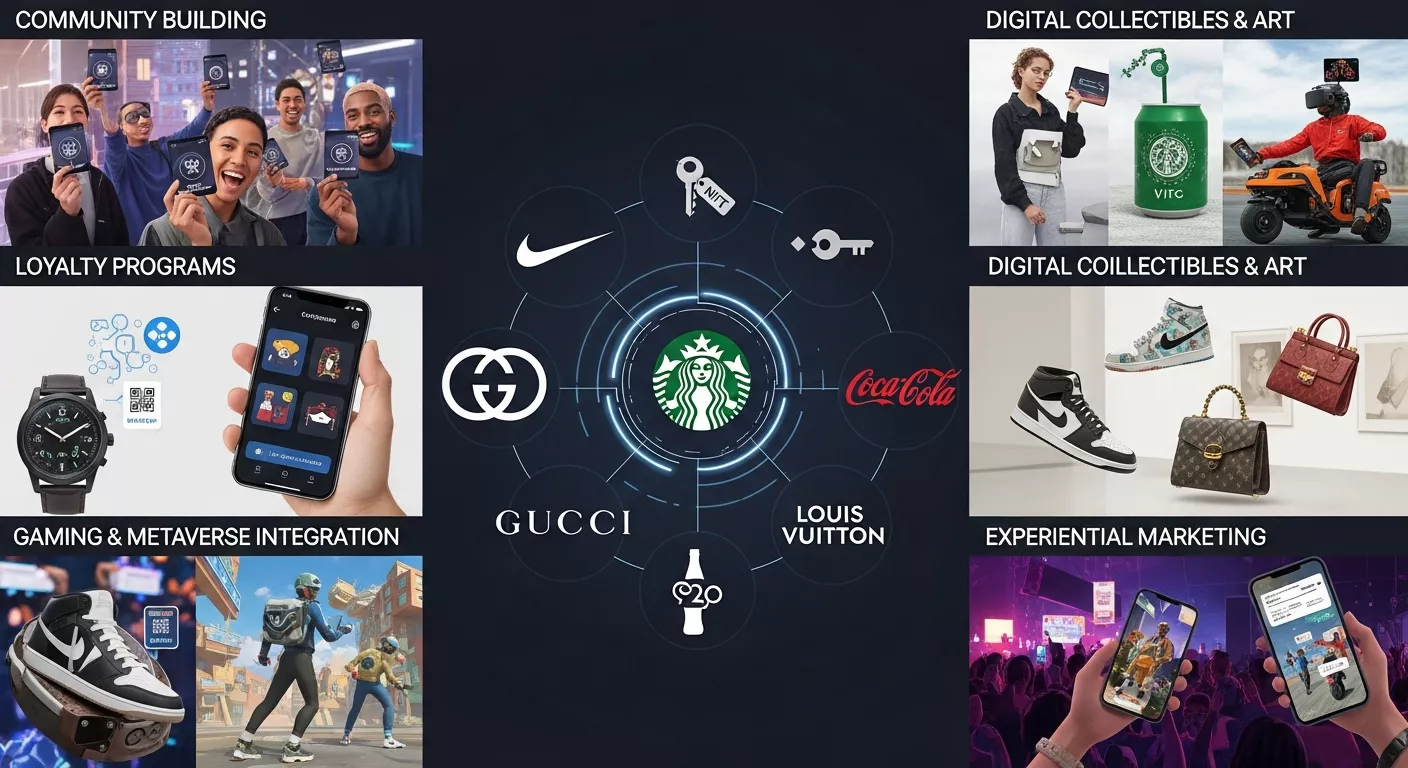
While speculative collectables declined, some brands continue exploring practical token applications.
Membership and Access Passes
Brands are using token-gated communities to provide exclusive content, event access, and loyalty rewards.
Authentication and Digital Provenance
Luxury and fashion companies are experimenting with blockchain-backed certificates to verify authenticity and ownership history.
Creator Monetization Models
Artists, musicians, and content creators are exploring tokens for royalties, fan engagement, and direct audience relationships.
Web3 Brand Experiences
Rather than launching collectible hype projects, many brands are now integrating blockchain into broader digital experiences focused on utility.
Conclusion
The NFT market crash marked the end of an unsustainable speculative era, but not the end of digital ownership innovation. While hype-driven projects collapsed under weak fundamentals, the underlying blockchain technology continues to offer meaningful possibilities. From gaming and ticketing to authentication and tokenized assets, practical use cases are beginning to replace speculative excess. The correction has forced investors, creators, and businesses to focus on utility, transparency, and long-term value instead of fast profits. What comes next for NFTs will likely be quieter, more mature, and far more useful—driven not by hype cycles, but by real-world applications solving genuine problems.
FAQs
1. Why is the NFT market crashing?
The NFT market is crashing due to multiple factors, including cryptocurrency volatility, oversupply of low-quality projects, rising interest rates, declining investor confidence, and reduced speculative demand. Many collections lacked long-term utility, which made prices unsustainable once hype faded.
2. Did the cryptocurrency market crash affect NFTs?
Yes, NFTs are closely tied to cryptocurrencies like Ethereum and Solana. When crypto prices declined, NFT valuations dropped as well. Lower liquidity across crypto markets also reduced investor appetite for speculative digital assets.
3. Are NFTs dead or just evolving?
NFTs are not dead, but the speculative phase has largely collapsed. The market is shifting away from overpriced collectibles toward practical applications like ticketing, gaming assets, digital identity, and tokenized ownership models.
4. What caused the NFT bubble to burst?
The bubble burst due to FOMO-driven speculation, celebrity hype, oversaturated collections, wash trading, scam projects, and unrealistic valuations disconnected from real utility. Once new buyers slowed, the market corrected sharply.
5. Do NFTs still have long-term value?
Some do. Projects with strong communities, genuine utility, intellectual property value, or real-world use cases may retain long-term relevance. Value increasingly depends on utility rather than speculation.
6. How is regulation affecting the NFT industry?
Regulation may help reduce fraud, improve transparency, and attract institutional confidence. While some fear restrictions, clearer legal frameworks could support a healthier and more sustainable digital asset ecosystem.
7. What industries could benefit from NFT technology?
Potential industries include gaming, ticketing, real estate, supply chain verification, loyalty programs, digital identity, music rights, and luxury authentication. These applications focus on ownership infrastructure rather than speculation.
8. Can NFTs recover in the future?
A speculative boom like 2021 may be difficult to repeat, but NFTs could recover in a different form through utility-driven adoption. Growth is more likely to come from infrastructure use than collectible mania.
9. What lessons should investors learn from the NFT crash?
Key lessons include avoiding hype-driven decisions, researching project fundamentals, prioritizing utility, diversifying investments, and understanding that emerging technologies often go through bubbles before sustainable adoption.
10. How are brands still using NFTs today?
Many brands use NFTs for loyalty programs, token-gated memberships, event access, digital authentication, and creator engagement. The focus has shifted from collectible drops to practical customer experiences.