
The Global NFT Market: Trends, Growth, and Future
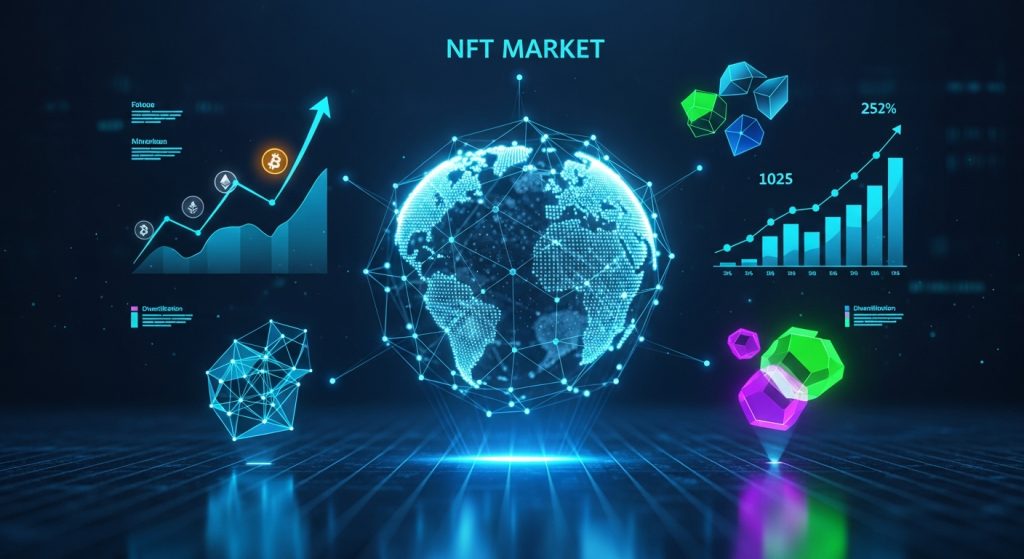
The global NFT market is evolving from hype-driven speculation to utility-focused innovation. Powered by blockchain, NFTs enable true digital ownership across art, gaming, and real-world assets, shaping the future of identity, commerce, and decentralized ecosystems.
Digital ownership has fundamentally changed how we interact with assets on the internet. A few years ago, the concept of buying a completely digital item seemed foreign to most consumers. Now, digital assets represent a massive financial ecosystem. Non-fungible tokens, or NFTs, sit at the very center of this shift, providing a verifiable way to claim ownership over digital goods.
The global NFT market has experienced dramatic highs and notable market corrections, leaving many observers wondering about its long-term viability. Beyond the initial hype of million-dollar digital monkey pictures, a robust infrastructure of smart contracts, decentralized finance, and digital property rights is quietly maturing.
Understanding this space requires looking past the sensational headlines. Investors, creators, and brands are actively building utility-driven projects that solve real problems. They are moving away from pure speculation and focusing on community building, digital identity, and brand loyalty programs.
Understanding the Mechanics of the Global NFT Market
To grasp the scale of the global NFT market, you first need to understand the underlying technology. NFTs are unique cryptographic tokens that exist on a blockchain and cannot be replicated. Unlike cryptocurrencies such as Bitcoin or Ethereum, which are fungible and can be exchanged one-for-one, each NFT has a distinct digital signature.
This unique signature makes NFTs perfect for representing specific assets. The underlying code, known as a smart contract, automatically executes predefined rules when certain conditions are met. Smart contracts handle the transfer of ownership, distribute royalties to original creators, and verify the authenticity of the asset without requiring a central authority.
Ethereum remains the dominant blockchain for high-value NFT transactions. Its early mover advantage and established security protocols make it the preferred choice for blue-chip collections. However, high transaction fees on the Ethereum network have paved the way for alternative blockchains. Solana, Polygon, and Flow have emerged as popular alternatives, offering faster transaction speeds and significantly lower costs. These alternative networks are particularly attractive for gaming ecosystems and high-volume, low-cost digital collectibles. Learn more about the Complete NFT Marketing Checklist.
Major Sectors Fueling NFT Adoption
The global NFT market is not a monolith. It consists of several distinct sectors, each with its own audience, utility, and growth trajectory.
Digital Art and Collectibles
Digital art was the first sector to capture mainstream attention. For decades, digital artists struggled to monetize their work because digital files could be infinitely copied. NFTs solved this problem by introducing digital scarcity.
Profile picture (PFP) projects like CryptoPunks and Bored Ape Yacht Club turned digital collectibles into massive status symbols. Owning one of these assets became a digital flex, similar to wearing a luxury watch. Beyond PFPs, independent digital artists have found a global audience, selling one-of-a-kind pieces directly to collectors through marketplaces like OpenSea, Blur, and Foundation.
Gaming and Play-to-Earn Ecosystems
Video games represent one of the most natural use cases for non-fungible tokens. Gamers are already accustomed to buying digital items like character skins, weapons, and virtual currency. Traditionally, these items remained locked within the game’s ecosystem, owned ultimately by the game developer.
NFTs allow players to truly own their in-game assets. If a player earns a rare sword in a blockchain-based game, they can sell that sword on an open marketplace for real cryptocurrency. Games like Axie Infinity popularized the play-to-earn model, allowing users in developing nations to earn a living simply by playing a game. While the play-to-earn model has faced economic sustainability challenges, the broader concept of web3 gaming continues to attract massive venture capital investment.
Virtual Real Estate and the Metaverse
The concept of the metaverse relies heavily on digital ownership. Decentralized virtual worlds like Decentraland and The Sandbox allow users to buy, build on, and monetize digital parcels of land.
Brands and investors have poured millions into virtual real estate, hoping to establish a presence in the next iteration of the internet. Companies can host virtual events, open digital storefronts, and create interactive experiences for a global audience. While active user numbers in these virtual worlds currently fluctuate, the underlying infrastructure continues to improve, pointing toward a more immersive digital future.
Regional Breakdown of the NFT Landscape
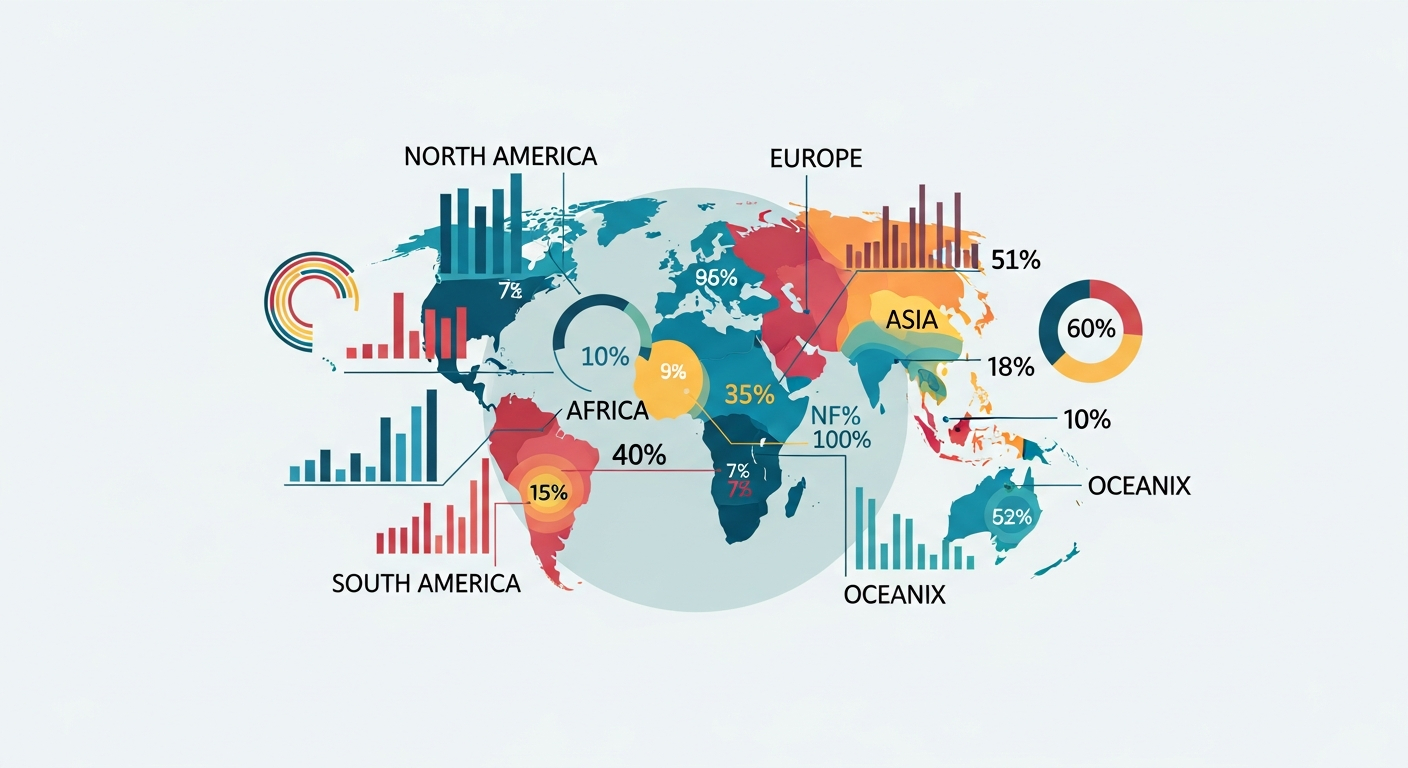
Adoption of blockchain technology varies significantly by region, driven by cultural attitudes, regulatory environments, and technological infrastructure.
North America: The Early Adopters
North America, particularly the United States, commands a significant share of the global NFT market. The region benefits from a high concentration of venture capital, tech talent, and established cryptocurrency exchanges. Major tech companies and traditional brands based in the US have been quick to launch their own digital asset initiatives. However, regulatory uncertainty remains a persistent hurdle. The Securities and Exchange Commission (SEC) continues to scrutinize various crypto projects, forcing NFT platforms to navigate a complex and often unclear legal landscape.
Asia-Pacific: The Rising Powerhouse
The Asia-Pacific region is rapidly becoming a dominant force in the NFT space. Countries like the Philippines, Vietnam, and Indonesia have seen massive adoption of play-to-earn gaming, driven by a young, mobile-first population and a desire for alternative income streams.
Meanwhile, South Korea and Japan are integrating NFTs into their established gaming and entertainment industries. K-pop agencies are exploring digital collectables to deepen fan engagement, and major Japanese gaming studios are actively developing blockchain-based titles. The regulatory environment in some Asian countries is also becoming more accommodating, providing clear guidelines that encourage innovation.
Europe: Regulatory Frameworks and Innovation
Europe is taking a measured approach to the global NFT market. The European Union has focused heavily on creating a comprehensive regulatory framework for digital assets, known as the Markets in Crypto-Assets (MiCA) regulation.
While MiCA primarily targets cryptocurrencies, its implementation brings a level of legitimacy and clarity to the broader web3 ecosystem. European luxury brands, particularly those based in France and Italy, have been highly active in the space, using NFTs to authenticate physical luxury goods and offer exclusive digital perks to high-net-worth clients.
Challenges Facing the Global NFT Market
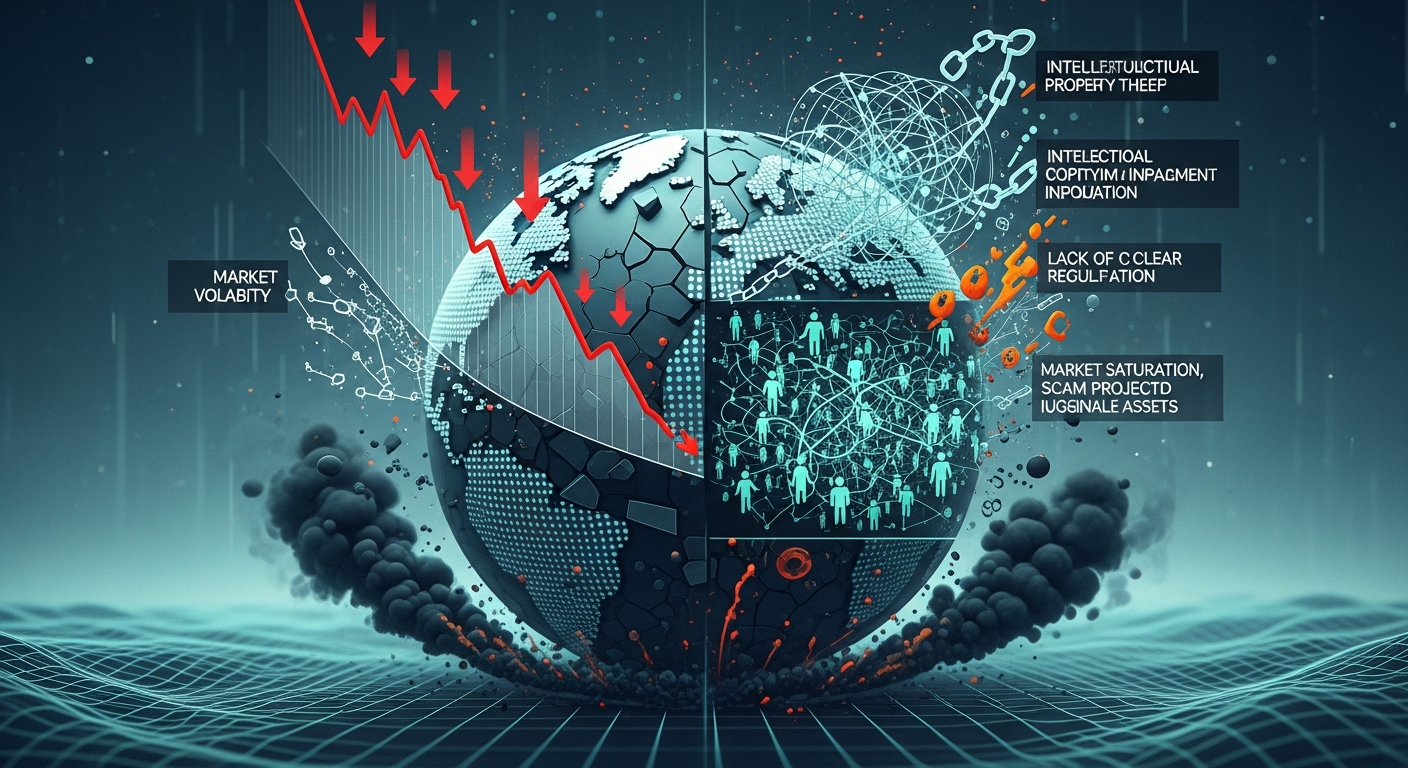
Despite significant growth, the industry faces severe hurdles that must be addressed before mass adoption can occur.
Environmental Concerns and Carbon Footprints
In the early days of the NFT boom, environmentalists heavily criticized the technology for its massive energy consumption. This was primarily due to Ethereum’s “proof-of-work” consensus mechanism, which required vast amounts of computing power to validate transactions.
The industry has made massive strides to correct this. Ethereum successfully transitioned to a “proof-of-stake” model, reducing its energy consumption by over 99%. Additionally, networks like Solana and Polygon were designed from the ground up to be energy-efficient. While the environmental argument against NFTs is largely outdated, the industry still battles the lingering public perception of being ecologically harmful.
Copyright and Intellectual Property Disputes
The decentralized nature of blockchain makes it incredibly difficult to police intellectual property theft. Bad actors frequently download artwork created by independent artists and mint it as an NFT without permission.
Major marketplaces struggle to moderate this content effectively, often placing the burden of proof on the original creator. Furthermore, there is widespread confusion among buyers regarding what they actually own when they purchase an NFT. Buying a digital token does not automatically grant the buyer the underlying copyright to the image, leading to frequent legal disputes over commercial usage rights.
Market Volatility and Speculation
The global NFT market is notoriously volatile. Prices for digital assets can skyrocket overnight based on celebrity endorsements or social media hype, only to crash just as quickly.
This extreme speculation has led to a prevalence of scams, particularly “rug pulls,” where anonymous developers abandon a project after collecting funds from investors. To achieve long-term stability, the market must transition away from hype-driven trading and focus on assets that provide tangible, lasting utility.
How Brands Are Entering the Web3 Space
Traditional corporations have recognized the potential of NFTs as a new avenue for marketing and customer relationship management.
Fashion and Luxury
High-end fashion brands have fully embraced digital assets. Nike made headlines with its acquisition of RTFKT, a digital sneaker and collectibles studio. Nike has since generated millions in revenue by selling digital sneakers that avatars can wear in the metaverse.
Gucci, Louis Vuitton, and Prada have launched their own NFT collections. These brands often tie digital tokens to physical items. When a customer buys a limited-edition physical handbag, they receive a corresponding NFT that proves authenticity and grants access to future VIP events. This “phygital” approach bridges the gap between the physical and digital worlds seamlessly.
Sports and Entertainment
The sports industry has leveraged NFTs to revolutionize fan engagement. NBA Top Shot, built on the Flow blockchain, allows basketball fans to buy, sell, and trade officially licensed video highlights. This modernized the concept of trading cards for the digital age.
Similarly, musicians are using NFTs to bypass traditional record labels. Artists can release their music directly to fans as limited-edition tokens. In return, fans might receive royalty shares, exclusive concert tickets, or backstage access. This model empowers creators by giving them direct control over their revenue streams and fan communities.
The Future of Non-Fungible Tokens
As the underlying technology matures, the global NFT market will expand far beyond art and collectibles. The next phase of adoption will focus heavily on utility.
Event Ticketing and Access
Scalpers, counterfeit tickets, and exorbitant platform fees plague traditional event ticketing. NFTs offer a streamlined solution. An NFT ticket is impossible to counterfeit. Furthermore, smart contracts can be programmed to cap the resale price of a ticket, effectively eliminating price gouging. Event organisers can also program the smart contract to capture a percentage of secondary-market sales, creating a new, continuous revenue stream.
Real-World Asset Tokenization
One of the most exciting future applications is the tokenization of real-world assets. Real estate, fine wine, and physical art can be represented on a blockchain. This allows for fractional ownership, meaning a group of investors could pool their money to purchase a percentage of a commercial office building or a rare painting. This lowers the barrier to entry for retail investors and brings unprecedented liquidity to traditionally illiquid markets.
Digital Identity and Credentials
In the future, your professional credentials, medical records, and digital identity could be securely stored as NFTs. Universities could issue diplomas as non-transferable tokens, allowing employers to instantly verify a candidate’s educational background without contacting the institution. This secure, decentralized method of data storage puts individuals back in control of their personal information.
Frequently Asked Questions (FAQ)
1. What is an NFT?
An NFT (non-fungible token) is a unique digital asset stored on a blockchain that proves ownership and authenticity of items like art, music, or virtual goods.
2. How are NFTs different from cryptocurrencies?
Cryptocurrencies are interchangeable (fungible), while NFTs are unique and cannot be exchanged on a one-to-one basis.
3. What blockchain networks support NFTs?
Popular networks include Ethereum, Solana, Polygon, and Flow, each offering different speeds, fees, and scalability.
4. What can NFTs be used for?
NFTs are used in digital art, gaming assets, virtual real estate, event tickets, identity verification, and real-world asset tokenization.
5. Are NFTs a good investment?
NFTs can be profitable but are highly volatile. Value depends on utility, community, and demand rather than guaranteed returns.
6. What is a smart contract in NFTs?
A smart contract is self-executing code that automates ownership transfers, royalties, and rules without intermediaries.
7. Do NFTs give copyright ownership?
Not necessarily. Buying an NFT usually grants ownership of the token, not the intellectual property rights of the content.
8. What are the risks of NFTs?
Risks include market volatility, scams (like rug pulls), copyright issues, and uncertain regulations.
9. Are NFTs environmentally harmful?
Earlier concerns existed, but many blockchains now use energy-efficient systems like proof-of-stake, reducing environmental impact significantly.
10. What is the future of NFTs?
NFTs will expand into ticketing, digital identity, real-world assets, and brand engagement, focusing more on utility than speculation.
Navigating the Next Era of Digital Ownership
The global NFT market has evolved significantly from its origins as a niche corner of the internet. It has weathered intense speculation, market corrections, and public skepticism to emerge as a foundational technology for the next generation of the web.
As developers continue to build better infrastructure, the focus is shifting rapidly toward utility, interoperability, and seamless user experiences. The days of buying a digital asset purely in hopes of selling it for a higher price the next day are fading. In its place, a more sustainable ecosystem is forming—one where digital ownership enhances gaming, revolutionizes ticketing, authenticates luxury goods, and empowers independent creators.
Organizations and individuals who take the time to understand this technology now will be well-positioned to capitalize on the next wave of digital innovation. The transition from physical to digital ownership is well underway, and the global NFT market is leading the charge.