
Gamification in NFT Marketing: How to Use Game Mechanics to Skyrocket Engagement and Sales

In the fast-paced world of NFT marketing, simply releasing a collection is no longer enough. With thousands of projects vying for attention, introducing game mechanics to your strategy can transform passive observers into active participants. By leveraging elements such as points, leaderboards, challenges, and rewards, gamification fosters deeper engagement, stronger community bonds, and ultimately, higher conversion rates. In this comprehensive guide, we’ll explore the fundamental principles of gamification, reveal the top game mechanics you can implement today, and provide a step-by-step framework to launch your own gamified NFT campaign. Whether you’re a seasoned marketer or a newcomer to the NFT space, this post will equip you with actionable insights to turn your marketing efforts into an immersive, rewarding experience.
Understanding Gamification Principles

Gamification involves applying game-like mechanics to non-game environments to engage users, motivate behavior, and enhance participation. When used strategically in an NFT ecosystem, it transforms routine actions—like exploring content, making purchases, or engaging with the community—into rewarding experiences that feel fun and purposeful.
At the core of gamification are five foundational principles:
-
Clear Objectives: Establish well-defined goals, challenges, or milestones that guide users through your NFT platform. This clarity ensures participants understand expectations and remain motivated to engage with your offerings.
-
Instant Feedback: Provide immediate updates on achievements, points earned, or ranking changes. Real-time feedback reinforces user actions, builds satisfaction, and encourages continued participation.
-
Progression Mechanics: Introduce levels, tiers, or stages that unlock new benefits, content, or privileges as users advance. This sense of growth and accomplishment maintains long-term engagement and investment in the ecosystem.
-
Social Interaction: Foster collaboration, competition, and community connection through leaderboards, team challenges, or content sharing. Social elements amplify engagement, generate organic visibility, and deepen emotional investment.
-
Reward Systems: Incentivize participation with tangible benefits such as rare NFT editions, token airdrops, exclusive access, or virtual experiences. Rewards drive both intrinsic motivation (personal satisfaction) and extrinsic motivation (collectables or status).
Integrating these principles into your NFT marketing strategy encourages consistent participation, builds a loyal community, and strengthens the project’s visibility. By creating an immersive and interactive experience, gamification taps into users’ natural desire for achievement, recognition, and connection—turning casual participants into passionate advocates who help drive organic growth. Read more about The Ultimate Guide to Influencer Marketing for NFTs.
Benefits of Gamification in NFT Marketing
Gamification involves applying game-like mechanics to non-game environments to engage users, motivate behavior, and enhance participation. When used strategically in an NFT ecosystem, it transforms routine actions—like exploring content, making purchases, or engaging with the community—into rewarding experiences that feel fun and purposeful.
At the core of gamification are five foundational principles:
-
Clear Objectives: Establish well-defined goals, challenges, or milestones that guide users through your NFT platform. This clarity ensures participants understand expectations and remain motivated to engage with your offerings.
-
Instant Feedback: Provide immediate updates on achievements, points earned, or ranking changes. Real-time feedback reinforces user actions, builds satisfaction, and encourages continued participation.
-
Progression Mechanics: Introduce levels, tiers, or stages that unlock new benefits, content, or privileges as users advance. This sense of growth and accomplishment maintains long-term engagement and investment in the ecosystem.
-
Social Interaction: Foster collaboration, competition, and community connection through leaderboards, team challenges, or content sharing. Social elements amplify engagement, generate organic visibility, and deepen emotional investment.
-
Reward Systems: Incentivize participation with tangible benefits such as rare NFT editions, token airdrops, exclusive access, or virtual experiences. Rewards drive both intrinsic motivation (personal satisfaction) and extrinsic motivation (collectibles or status).
Integrating these principles into your NFT marketing strategy encourages consistent participation, builds a loyal community, and strengthens the project’s visibility. By creating an immersive and interactive experience, gamification taps into users’ natural desire for achievement, recognition, and connection—
Key Game Mechanics to Use
To maximize engagement and retention in NFT marketing, leveraging the right game mechanics is crucial. Each mechanic encourages specific behaviors while making participation enjoyable and rewarding. Here’s a deeper look at proven tactics:
-
Points and XP (Experience Points):
Reward users with points or experience for actions such as minting NFTs, engaging in community events, sharing content on social media, or completing educational tasks. Accumulated points can unlock higher tiers, exclusive perks, or special content, motivating users to remain active. -
Badges and Achievements:
Introduce collectible badges for significant milestones—like first NFT mint, referral achievements, quiz completions, or event participation. Display badges prominently in profiles, dashboards, or on-chain to provide social proof and recognition, reinforcing accomplishment and status within the community. -
Leaderboards:
Implement competitive rankings to highlight top performers based on points, referrals, or trade volume. Weekly or monthly leaderboard rotations sustain excitement, foster friendly competition, and encourage users to increase activity to claim top positions. -
Challenges and Quests:
Create time-limited or ongoing quests, such as treasure hunts across your website, solving puzzles for airdrops, or participating in community-driven art contests. Challenges guide users through a structured experience, driving engagement and exploration while rewarding persistence and creativity. -
Progression Paths:
Design tiered levels (e.g., Bronze, Silver, Gold) with escalating rewards. Benefits can include early access to NFT drops, discounted mint prices, invite-only events, or exclusive content. Progression systems give users tangible goals, encouraging ongoing participation. -
Random Rewards:
Incorporate elements of chance, such as loot-box style drops, mystery packs, or surprise NFTs and native tokens. Randomized rewards generate excitement, unpredictability, and repeated interactions, enhancing engagement through gamified anticipation.
Strategic Integration:
The most effective NFT campaigns combine multiple mechanics to create layered, immersive experiences. By mixing points, badges, leaderboards, challenges, progression, and random rewards, you maintain curiosity, drive consistent participation, and motivate users to explore every facet of your ecosystem.
Case Studies: Successful Gamified NFT Campaigns
Several high-profile NFT projects have leveraged gamification to outstanding effect. Here are two notable examples:
- Bored Ape Yacht Club (BAYC): Alongside its collectible apes, BAYC introduced member-exclusive quests and events—such as treasure hunts and virtual yacht parties—that rewarded participants with limited edition NFTs and merchandise. This approach sustained community excitement between major drops and reinforced brand loyalty.
- Zed Run: The digital horse-racing platform uses a mix of breeding mechanics, leaderboards, and seasonal tournaments to engage users. Players earn points for race wins and breeding milestones, unlocking rare horse traits and access to VIP tracks, driving both on-chain activity and secondary-market trades.
These case studies illustrate how gamification not only attracts users but also encourages continuous participation, leading to vibrant secondary markets and long-term community growth.
Step-by-Step Guide to Implement Gamification in Your NFT Campaign
Ready to gamify your next NFT drop? Follow this roadmap to build a structured, engaging campaign:
- Define Clear Goals: Are you aiming for more mint volume, higher secondary trades, or stronger community engagement? Set specific KPIs for each objective.
- Choose Your Mechanics: Based on your goals, select 2–4 core game elements (points, quests, leaderboards, badges). Keep mechanics easy to understand and execute.
- Design the Reward Structure: Map out how users earn points, the thresholds for unlocking tiers, and the nature of their rewards (exclusive NFTs, token airdrops, real-world swag). Ensure rewards align with perceived value.
- Build the Tech Infrastructure: Leverage smart contracts to automatically track participation and distribute rewards. Partner with platforms like Guild.xyz or Thirdweb for on-chain gamification modules.
- Develop Engaging Content: Create narrative-driven quests, interactive challenges, and visually appealing UI components. Use countdown timers, progress bars, and pop-up notifications to maintain momentum.
- Launch and Promote: Announce your gamified campaign across social media, Discord, Telegram, and email newsletters. Offer early-bird incentives to your top followers and influencer partners.
- Monitor and Iterate: Track participation rates, completion metrics, community feedback, and on-chain analytics. Refine difficulty levels, reward ratios, and communication cadence based on real-time data.
By following these steps, you can launch a polished, gamified NFT campaign that delights collectors and yields measurable marketing outcomes.
Tools and Platforms for Gamified NFT Campaigns
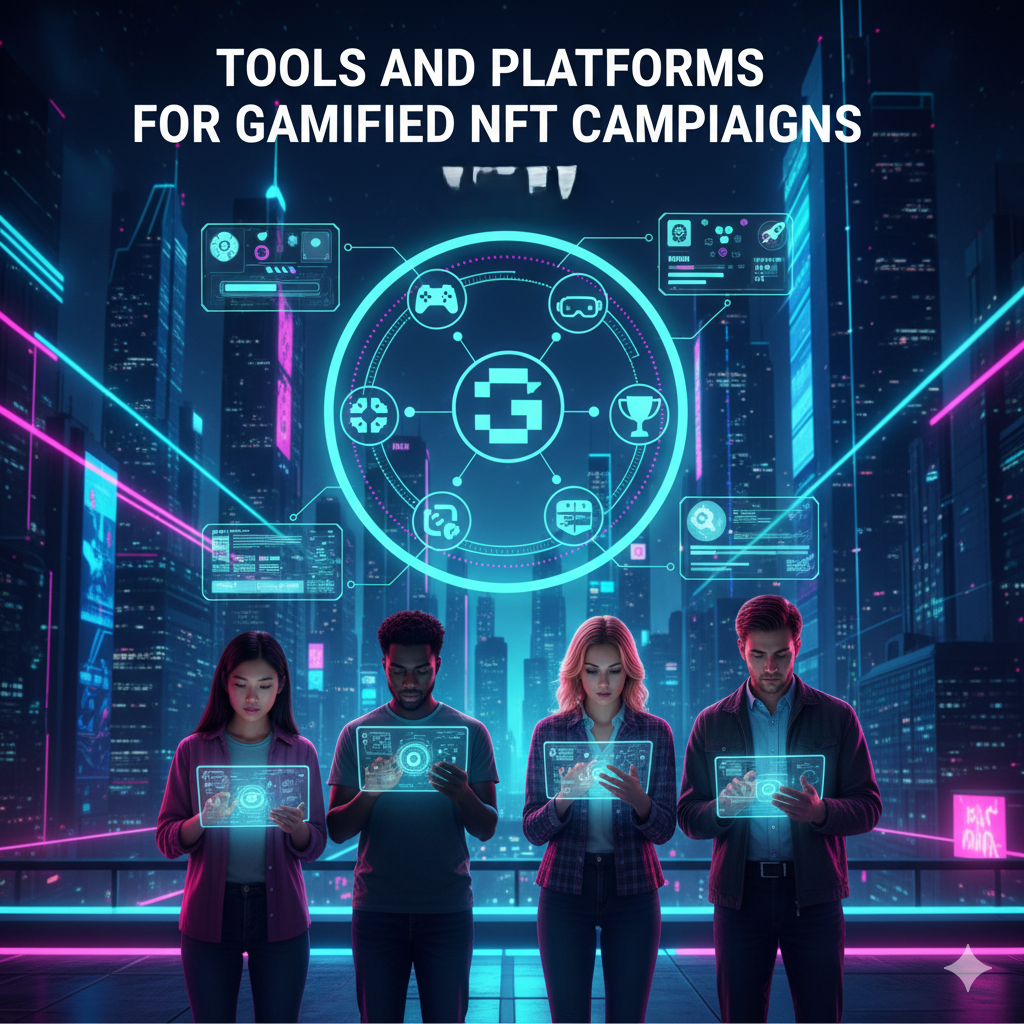
Several specialized tools can accelerate your gamification efforts:
- Thirdweb: Modular smart contract SDKs for minting, rewards distribution, and on-chain tracking.
- Moralis: Web3 development platform with real-time database and event listeners for gamified actions.
- Guild.xyz: Community management tool that integrates quests, roles, and point systems directly into Discord.
- Collab.Land: Token-gated roles and automated badge distribution for community-driven campaigns.
These solutions reduce development overhead and allow you to focus on creative game design rather than low-level coding.
Measuring Success: Metrics and KPIs
To accurately assess the effectiveness of your gamification strategy in NFT campaigns, tracking key performance indicators (KPIs) is essential. These metrics provide insights into user engagement, community growth, and revenue impact:
-
Participation Rate:
Measure the percentage of your audience engaging with quests, challenges, or gamified tasks. A higher participation rate indicates that your game mechanics are compelling and resonate with your community. -
Completion Rate:
Track the ratio of users who finish tasks versus those who start them. Low completion rates may highlight friction points in your quests, unclear instructions, or overly complex challenges. -
Daily/Weekly Active Users (DAU/WAU):
Monitor growth in repeat engagement compared to baseline activity. DAU and WAU metrics help evaluate how well gamification retains attention and encourages frequent platform interaction. -
Referral and Viral Coefficient:
Assess the average number of new users brought in per participant through sharing mechanics, such as leaderboard competitions or reward-linked referrals. This shows how effectively gamification drives organic growth. -
Sales Uplift:
Quantify increases in primary mint revenue and secondary market volume that are directly attributable to gamified promotions. Link specific tasks or reward triggers to measurable sales outcomes to justify ROI.
Continuous Optimization:
Regularly review these KPIs to refine your gamification mechanics, reward structures, and promotional tactics. Use A/B testing, user feedback, and behavioural analytics to identify opportunities for improvement, ensuring sustained engagement, community growth, and revenue performance.
Best Practices and Pitfalls to Avoid
To ensure your gamified campaign delivers strong results without alienating users, it’s critical to follow proven best practices while avoiding common pitfalls.
- Do Keep It Simple:
Overly complex rules can quickly confuse participants and reduce engagement. Start with a limited set of easy-to-understand mechanics, then gradually introduce advanced features as users become more comfortable. - Do Maintain Fairness:
Make sure that points, rewards, and progression systems are transparent and realistically achievable. If users feel the system is biased toward whales or insiders, trust and participation will drop rapidly. - Do Foster Social Interaction:
Encourage collaboration and friendly competition through leaderboards, team challenges, and community quests. Social dynamics strengthen emotional investment and turn individual users into an active ecosystem. - Don’t Over-reward:
Flooding users with constant free NFTs or token incentives can dilute perceived value and attract short-term reward hunters instead of long-term collectors. Balance scarcity with meaningful incentives. - Don’t Neglect Mobile Users:
A large portion of NFT collectors interact via mobile wallets and apps. Ensure all interfaces, notifications, and game mechanics are fully optimized for mobile performance. - Don’t Forget Legal Compliance:
Always verify that your reward systems follow local regulations regarding contests, lotteries, data privacy, and token distributions. Compliance protects both your brand reputation and your users.
Conclusion
Gamification offers a powerful toolkit to elevate your NFT marketing from static promotions to interactive experiences. By applying clear objectives, dynamic feedback loops, and compelling reward systems, you can transform casual browsers into dedicated community members and advocates. Use the game mechanics, case studies, and step-by-step framework outlined in this guide to launch your own gamified campaign. With the right blend of creativity, technology, and data-driven optimization, you’ll not only stand out in the crowded NFT marketplace but also build lasting relationships with collectors who are invested in your project’s success.
Ready to gamify your next NFT drop? Start designing your first quest today and watch engagement, loyalty, and sales levels reach new heights.
Frequently Asked Questions:
Q1: What is community-centric marketing?
Community-centric marketing focuses on building genuine relationships with local organizations, businesses, and audiences to foster trust, engagement, and long-term loyalty.
Q2: How do I identify ideal community partners?
Look for local entities that share your brand values, target demographic, and engagement goals, such as nonprofits, schools, clubs, or complementary businesses.
Q3: What types of events work best for collaboration?
Workshops, charity drives, pop-up markets, author readings, product demos, and neighborhood initiatives are effective for co-hosting and promoting joint engagement.
Q4: How can social media support local campaigns?
Use neighborhood groups, local hashtags, and behind-the-scenes content to extend reach, engage audiences, and amplify partnerships digitally.
Q5: How do I measure the success of community marketing efforts?
Track KPIs such as event attendance, foot traffic, social engagement, newsletter sign-ups, and incremental sales. Use surveys, analytics, and CRM tools to optimize future campaigns.