
Element Market NFT: Your Complete Guide to This Rising Platform
Element Market NFT is a multi-chain marketplace enabling seamless NFT trading across multiple blockchains. With advanced tools, competitive fees, and cross-chain access, it offers a flexible solution for modern collectors, creators, and traders.
The NFT marketplace landscape continues to evolve at a rapid pace, with innovative platforms emerging to meet the growing demands of collectors, creators, and active traders. As digital ownership expands across multiple blockchains, users are no longer satisfied with single-chain limitations or basic trading features. Today’s NFT participants expect flexibility, lower fees, advanced tools, and seamless access to assets across different networks.
Element Market has positioned itself as a compelling option in this increasingly competitive space by addressing many of these modern challenges head-on. Unlike traditional marketplaces such as OpenSea and Rarible, which are often centered around one primary blockchain, Element Market embraces a multi-chain ecosystem. This approach allows users to explore, buy, sell, and manage NFTs from multiple blockchains within a single interface—saving time while reducing friction.
By combining cross-chain accessibility with advanced trading tools and a clean, user-friendly design, Element Market appeals to both newcomers and experienced NFT traders. Its growing feature set and focus on efficiency make it an increasingly relevant choice for those looking to navigate the next phase of the NFT economy with greater control and flexibility.
What is Element Market NFT?
Element Market is a multi-chain NFT marketplace that allows users to buy, sell, and trade non-fungible tokens across different blockchain networks. The platform supports various blockchain ecosystems, making it accessible to users who prefer different networks for their NFT transactions.
Unlike many single-chain marketplaces, Element Market’s multi-chain approach means users can access NFTs from Ethereum, Polygon, BNB Chain, and other supported networks all in one place. This consolidation saves time and reduces the complexity of managing NFT collections across multiple platforms.
The platform focuses on providing a user-friendly experience while maintaining the security and transparency that NFT traders expect. Element Market offers both basic marketplace functions and advanced trading features for more experienced users.
Key Features of Element Market
Multi-Chain Support
Element Market’s standout feature is its support for multiple blockchain networks. Users can browse and trade NFTs from different chains without switching between platforms or wallets constantly. This feature becomes particularly valuable as the NFT ecosystem becomes more fragmented across various blockchains.
The platform currently supports major networks including Ethereum, Polygon, BNB Smart Chain, and Avalanche. This broad compatibility means users can access a wider range of NFT collections and take advantage of different networks’ benefits—such as lower transaction fees on Polygon or faster confirmation times on BNB Chain.
Advanced Trading Tools
Element Market provides sophisticated trading tools that appeal to serious NFT traders. These include bulk buying and selling options, advanced filtering systems, and real-time price tracking across different marketplaces.
The platform’s aggregation features allow users to compare prices across multiple marketplaces simultaneously. This functionality helps traders identify the best deals and make informed purchasing decisions without manually checking several platforms.
User Interface and Experience
The platform emphasizes clean, intuitive design that makes NFT browsing and trading straightforward. Collections are well-organized with comprehensive filtering options that help users find specific types of NFTs quickly.
Search functionality includes filters for price ranges, blockchain networks, collection types, and various metadata attributes. This level of organization becomes crucial when dealing with large NFT collections or searching for specific traits.
How Element Market Compares to Other NFT Marketplaces
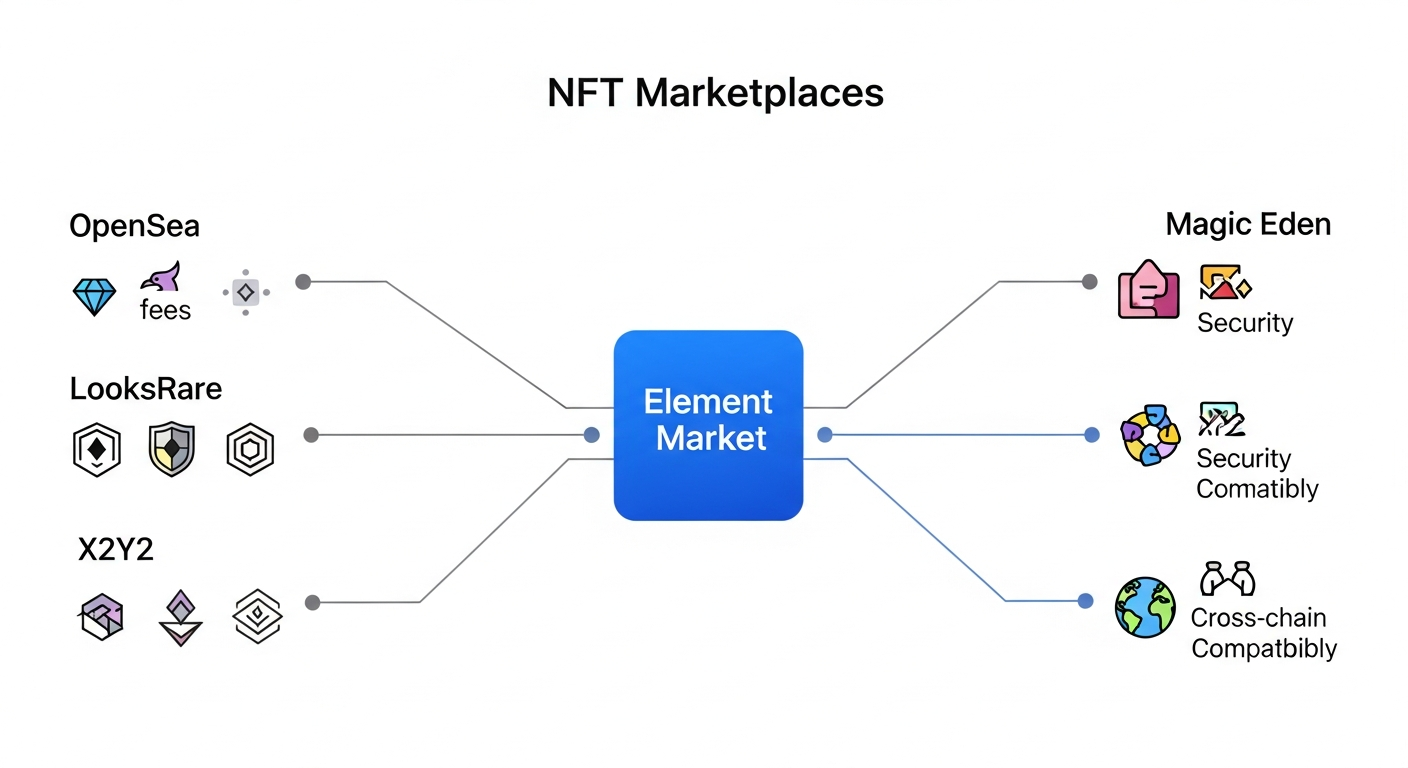
Fees and Pricing Structure
Element Market typically offers competitive fee structures compared to major competitors. While specific percentages may vary, the platform generally charges lower marketplace fees than some established alternatives.
The multi-chain approach also provides users with options for reducing transaction costs. Users can choose networks with lower gas fees for their transactions, potentially saving significant amounts during periods of high network congestion.
Collection Variety and Volume
While Element Market may not yet match the sheer volume of listings found on larger marketplaces like OpenSea, it offers access to diverse collections across multiple chains. The platform continues to grow its catalog as more creators and collectors discover its features.
The multi-chain support means Element Market can list collections that might be exclusive to specific networks, providing access to NFTs that single-chain marketplaces cannot offer.
Security and Trust Features
Element Market implements standard security measures expected from reputable NFT marketplaces. These include smart contract audits, secure wallet integrations, and verification systems for collections and creators.
The platform also provides transparency features that help users verify the authenticity and provenance of NFTs before making purchases.
Getting Started with Element Market NFT
Setting Up Your Account
Beginning your Element Market journey requires connecting a compatible cryptocurrency wallet. The platform supports popular wallets, including MetaMask, WalletConnect, and others that work across multiple blockchain networks.
Once connected, users can immediately start browsing collections and listings. Account setup is minimal, focusing on wallet integration rather than extensive personal information collection.
Making Your First Purchase
Purchasing NFTs on Element Market follows familiar patterns for those experienced with other marketplaces. Users can buy items at listed prices or make offers on pieces that accept negotiations.
The platform clearly displays all associated costs before transaction confirmation, including item price, marketplace fees, and estimated network gas fees. This transparency helps prevent unexpected charges.
Selling NFTs on the Platform
Listing NFTs for sale involves uploading your digital assets (if minting new ones) or importing existing NFTs from your connected wallet. The platform provides tools for setting prices, choosing auction formats, and adding detailed descriptions.
Sellers can take advantage of the multi-chain nature by listing items on the network that offers the best combination of fees and target audience for their specific NFTs.
Tips for Success on Element Market
Research and Due Diligence
Successful NFT trading on any platform requires thorough research. Element Market’s cross-chain aggregation features make it easier to compare prices and identify market trends, but users should still investigate collections, creators, and market conditions before making significant purchases.
Understanding the different blockchain networks and their characteristics helps optimize trading strategies. Some chains offer lower fees but potentially less liquidity, while others provide more established marketplaces with higher activity levels.
Timing and Market Awareness
NFT markets can be volatile, with prices fluctuating based on various factors including overall crypto market conditions, collection popularity, and network activity. Element Market’s real-time pricing data helps users stay informed about market movements.
Following collection roadmaps, creator announcements, and community discussions provides valuable context for making trading decisions.
Building Your Collection Strategy
Whether collecting for personal enjoyment or investment purposes, having a clear strategy helps guide decisions on Element Market. The platform’s diverse selection across multiple chains offers opportunities to build varied portfolios.
Consider factors like long-term holding versus active trading, preferred artistic styles or utility functions, and budget allocation across different price ranges and risk levels.
Collection Discovery and Filtering
Advanced filters allow users to browse by blockchain, price range, rarity traits, and collection type. This makes discovering hidden gems easier and saves time when managing large NFT portfolios across chains.
Marketplace Transparency and Trust
Element Market emphasizes transparency by displaying price histories, creator verification, and blockchain data clearly. This helps reduce the risk of scams and enables informed buying decisions.
Liquidity Across Chains
By aggregating NFTs from multiple networks, Element Market increases liquidity access. Users can discover collections with strong communities even on less-crowded chains, diversifying opportunities beyond Ethereum-only platforms.
NFT Portfolio Diversification
Collectors can spread risk by holding NFTs across several blockchains. Element Market makes this diversification manageable within one dashboard, supporting long-term portfolio strategies.
Element Market’s Role in the Future NFT Economy
As NFTs expand into gaming, metaverse assets, and digital identity, multi-chain marketplaces will become essential. Element Market is positioned to support this evolution by connecting ecosystems rather than isolating them.
The Future of Element Market NFT
Element Market continues developing new features and expanding its supported blockchain networks. The platform’s multi-chain approach positions it well for an increasingly diverse NFT ecosystem where different networks serve different purposes and communities.
Future developments may include additional blockchain integrations, enhanced trading tools, and expanded creator support programs. The platform’s growth trajectory suggests continued investment in user experience improvements and feature expansion.
As the NFT space matures, platforms that can aggregate multiple chains while providing sophisticated trading tools may gain significant advantages over single-chain alternatives.
Making the Most of Multi-Chain NFT Trading
Element Market NFT represents an interesting evolution in NFT marketplace design, addressing some limitations of single-chain platforms through its multi-network approach. The platform offers valuable tools for both casual collectors and serious traders, with features that can enhance your NFT experience.
Success on Element Market, like any NFT marketplace, requires understanding the technology, researching opportunities thoroughly, and developing clear strategies for your collecting or trading goals. The platform’s unique multi-chain capabilities provide additional options for optimizing costs and accessing diverse collections.
Consider exploring Element Market as part of a broader NFT strategy that might include multiple platforms and networks. The digital collectibles space continues evolving rapidly, and platforms like Element Market contribute to that growth by solving real problems faced by NFT enthusiasts.
Conclusion
Element Market NFT represents the next evolution of NFT marketplaces by solving fragmentation across blockchains. Its multi-chain infrastructure, advanced trading tools, and competitive fees make it appealing to collectors, creators, and traders alike. As the NFT ecosystem expands, platforms that unify networks will define the future—and Element Market is well-positioned to lead that shift.
FAQs – Element Market NFT (Extended)
1. What is Element Market NFT?
Element Market is a multi-chain NFT marketplace that allows users to buy, sell, and trade non-fungible tokens across multiple blockchain networks from a single platform. It combines NFT aggregation, advanced trading tools, and cross-chain accessibility to simplify NFT transactions for collectors and traders.
2. Which blockchains does Element Market support?
Element Market supports several major blockchain networks, including Ethereum, Polygon, BNB Smart Chain, Avalanche, and other emerging ecosystems. This multi-chain support enables users to explore NFTs with different fee structures, speeds, and communities without switching platforms.
3. Is Element Market beginner-friendly?
Yes, Element Market is designed to be beginner-friendly while still offering professional-grade tools. New users can easily browse collections, connect wallets, and purchase NFTs, while experienced traders can access advanced analytics, filters, and bulk trading options.
4. Does Element Market charge marketplace fees?
Yes, Element Market charges marketplace fees, but they are generally competitive and often lower than those on many single-chain NFT platforms. Users also benefit from choosing lower-fee blockchains, helping reduce overall transaction costs.
5. Can I compare NFT prices across marketplaces?
Absolutely. One of Element Market’s strongest features is its NFT aggregation system, which pulls listings from multiple marketplaces. This allows users to compare NFT prices in real time and identify the best deals without visiting multiple platforms.
6. Is Element Market secure?
Element Market prioritizes security by using audited smart contracts, non-custodial wallet connections, and verified NFT collections. Users maintain full control over their assets, reducing the risk associated with centralized custody.
7. Can creators mint NFTs on Element Market?
Yes, creators can mint new NFTs or list existing NFTs on Element Market across supported blockchains. This flexibility allows artists to choose networks with lower gas fees or stronger community engagement for their projects.
8. Does Element Market support bulk trading?
Yes, Element Market offers bulk buying and bulk selling tools designed for advanced users and active traders. These features help save time, reduce transaction friction, and optimize large-scale NFT trading strategies.
9. Do I need multiple wallets for different blockchains?
No, you do not need multiple wallets. A single compatible wallet—such as MetaMask or WalletConnect—can interact with multiple supported blockchain networks, making cross-chain NFT management much simpler.
10. Is Element Market good for long-term NFT collectors?
Yes, Element Market is well-suited for long-term collectors. Features like portfolio tracking, cross-chain visibility, and access to diverse NFT ecosystems help users build and manage long-term NFT holdings efficiently.
11. Are gas fees visible before purchasing NFTs?
Yes, Element Market displays all costs upfront, including NFT price, marketplace fees, and estimated gas fees. This transparency ensures users can make informed decisions before confirming any transaction.
12. How does Element Market compare to OpenSea?
Element Market differentiates itself by focusing on multi-chain aggregation and advanced trading tools. While OpenSea remains one of the largest Ethereum-centric marketplaces, Element Market offers broader blockchain access, better price comparison, and enhanced trading efficiency.