Data-Driven NFT Marketing: How to Use Analytics to Boost Engagement and Sales

Data-driven NFT marketing leverages on-chain and off-chain analytics to optimize campaigns, track collector behavior, and boost engagement. By using SMART goals, analytics tools, A/B testing, and ongoing performance tracking, creators can maximize sales and build stronger communities.
In the rapidly evolving world of NFTs, relying on gut feelings is no longer sufficient. By harnessing the power of analytics, you can gain actionable insights into collector behaviour, campaign performance, and market trends. This data-driven approach enables you to optimize your marketing strategies, boost engagement, and maximize sales for your digital assets.
Understanding Key NFT Marketing Metrics
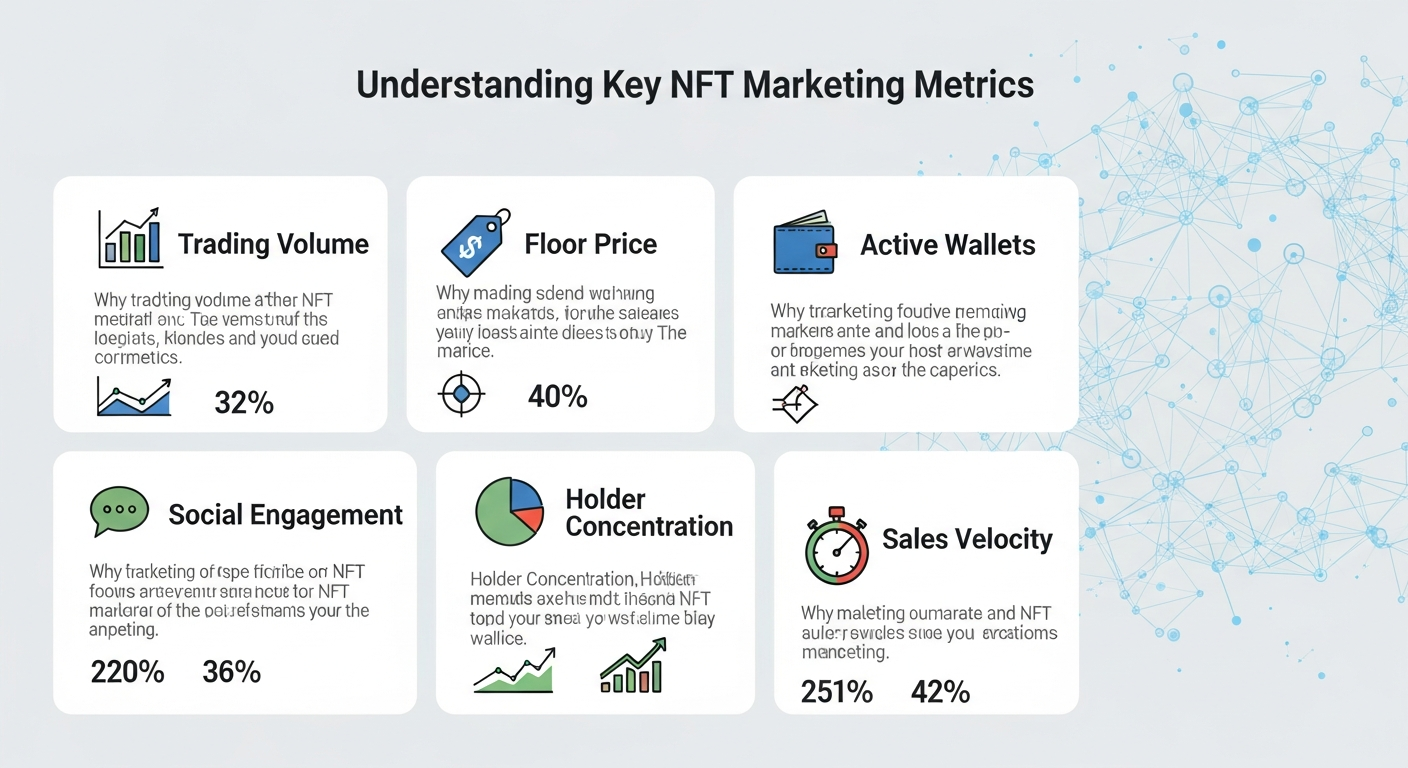
Before diving into analytics, its crucial to identify the metrics that matter most for NFT campaigns. These metrics help you measure success, spot opportunities, and course correct when performance falls short of expectations. Broadly speaking, NFT marketing metrics fall into two categories: on-chain and off-chain.
On-Chain Metrics
These metrics track NFT activity directly on the blockchain, providing transparent insights into market performance and community engagement. Key metrics include:
-
Transaction Volume: Total number of sales recorded on the blockchain over a given period. Monitoring this over time helps identify trends, market demand, and the impact of new drops or marketing campaigns.
-
Average Sale Price: Mean price at which your NFTs are traded, indicating perceived value. Tracking fluctuations can reveal collector sentiment, pricing strategy effectiveness, and scarcity value perception.
-
Wallet Distribution: Number of unique wallets holding your NFTs, reflecting community spread. A diverse distribution suggests broader adoption, reduces concentration risk, and signals the strength of the collector base.
-
Holder Growth: Track new wallets acquiring your NFTs over time to assess community expansion.
-
Secondary Market Activity: Measure resales, flipping behavior, and royalty generation to understand ongoing market interest.
-
Minting Patterns: Analyze when and how quickly NFTs are minted during drops to optimize launch timing and marketing strategies.
By regularly analyzing these on-chain metrics, NFT creators can make informed decisions on pricing, drops, community engagement, and long-term growth strategies.
Off-Chain Metrics
These metrics track activity outside the blockchain, reflecting audience engagement, marketing effectiveness, and overall brand reach. Key metrics include:
-
Website Traffic: Visits to your project site, landing pages, and drop pages. Monitoring traffic sources—organic, paid, referral, or social—helps identify which channels drive the most potential buyers and informs content and advertising strategies.
-
Social Engagement: Likes, shares, comments, and mentions across platforms like Twitter, Discord, Instagram, and Telegram. High engagement indicates active community interest, while sentiment analysis can reveal perceptions of your NFT project and inform communication strategies.
-
Conversion Rate: Percentage of visitors or followers who complete a desired action, such as minting or buying NFTs. Tracking conversions helps evaluate marketing campaigns, website usability, and user journey effectiveness.
-
Email Campaign Performance: Open rates, click-through rates, and subscriber growth provide insight into audience responsiveness to newsletters, announcements, or drop alerts.
-
Community Growth: Metrics such as Discord server members, Twitter followers, or newsletter subscribers reflect expanding audience reach and potential market for future NFT drops.
-
Engagement Depth: Monitor metrics like average session duration, page scroll depth, or time spent on mint pages to assess how effectively your content captures attention.
-
Referral and Affiliate Tracking: Analyze which influencers, partnerships, or campaigns drive traffic and conversions to optimize marketing spend.
By closely analyzing these off-chain metrics, NFT creators can refine marketing strategies, boost engagement, improve user experience, and ultimately increase conversions and sales.
Setting SMART Goals
With key metrics in mind, establish SMART goals that guide your NFT marketing efforts. Specific, measurable, achievable, relevant and time-bound objectives ensure clarity and accountability. For example, aim to increase Discord membership by 20 percent in the next 30 days or boost average sale price by 15 percent over the next quarter.
Tools and Platforms for NFT Analytics
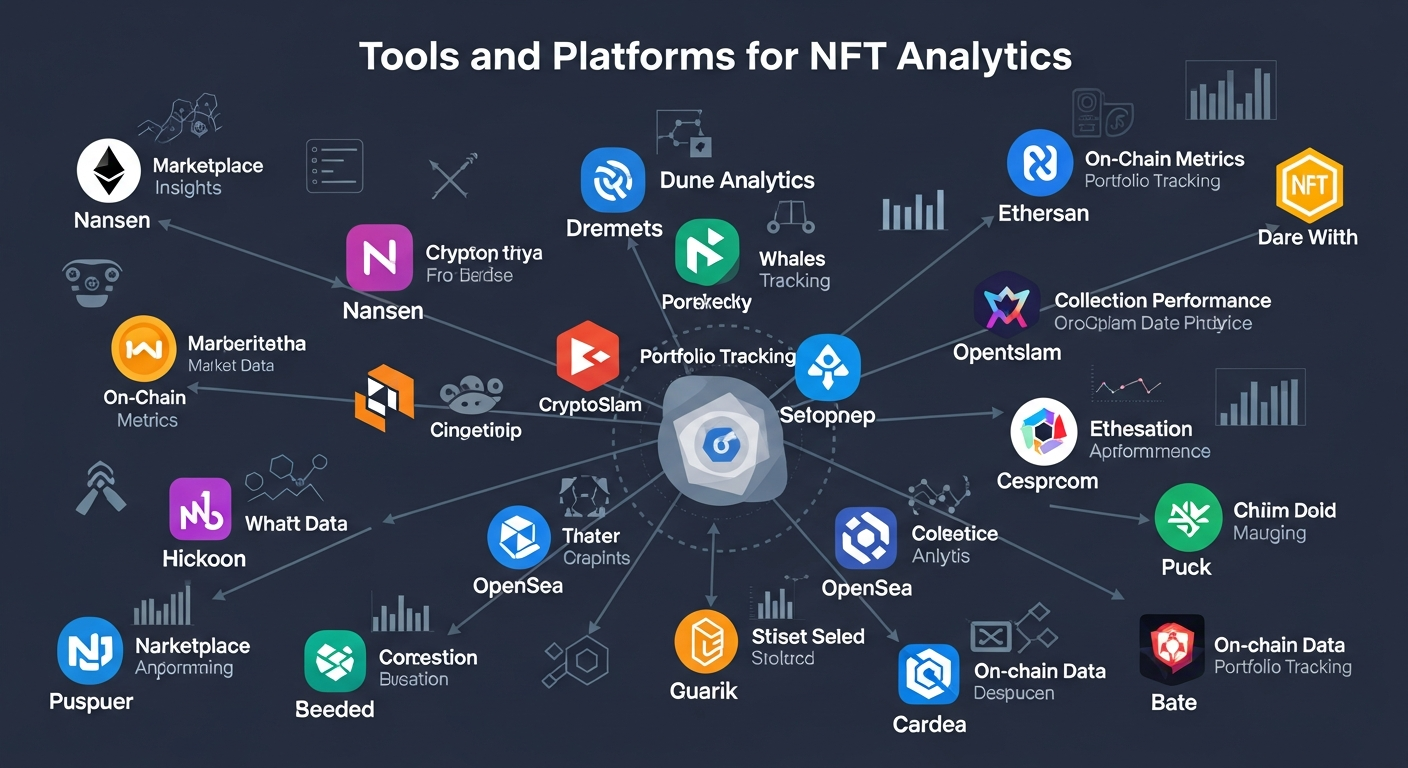
Choosing the right tools is essential for accurate data collection, meaningful analysis, and data-driven decision-making in NFT marketing. Consider integrating the following platforms into your workflow:
-
Blockchain Explorers: Platforms like Etherscan and Solscan provide raw on-chain data including transaction history, wallet activity, token transfers, and smart contract interactions. They help you track NFT sales, ownership distribution, and verify minting activity directly on the blockchain.
-
Third-Party Dashboards: Services like Dune Analytics and Nansen offer customizable visualizations, charts, and insights into trends such as top collectors, popular NFTs, market liquidity, and whale activity. These dashboards save time and make complex data easier to interpret.
-
Social Analytics Tools: Tools such as Hootsuite, Sprout Social, and Buffer track engagement metrics across platforms like Twitter, Discord, Instagram, and Telegram. They measure mentions, likes, shares, sentiment, and community growth, helping you understand audience interaction and refine marketing campaigns.
-
Web Analytics: Google Analytics, Hotjar, and similar platforms help monitor visitor behavior on NFT project websites, landing pages, and mint pages. Metrics such as page views, session duration, bounce rates, conversion funnels, and click-through rates inform optimization of user experience and marketing effectiveness.
-
A/B Testing and Optimization Tools: Platforms like Optimizely, VWO, and Google Optimize enable testing of landing pages, call-to-action buttons, and email campaigns, allowing creators to refine user experience and maximize conversions based on real-world data.
-
NFT-Specific Analytics Suites: Tools such as NonFungible.com and CryptoSlam provide market-wide insights, historical sales trends, rarity analysis, and collector behavior specific to NFTs, giving creators a competitive edge when planning drops or campaigns.
-
Data Aggregators and Alerts: Services that consolidate multiple sources of data and provide notifications about price changes, new collectors, or trending NFTs can help maintain timely and strategic decisions.
By combining these tools, NFT marketers can track both on-chain and off-chain performance, optimize campaigns, and make data-driven decisions to enhance engagement, boost sales, and grow a loyal collector community.
A/B Testing and Experimentation
Data-driven marketing thrives on continuous experimentation, allowing NFT creators and marketers to refine their strategies based on measurable results. A/B testing is a structured method where two (or more) variations of a marketing element—such as emails, landing pages, ad creatives, or call-to-action buttons—are shown to different segments of your audience. The goal is to determine which version performs better in terms of engagement, conversions, or other key objectives.
Key practices for effective A/B testing include:
-
Test One Variable at a Time: Focus on a single element per test, such as subject line, image, color scheme, or headline. This ensures clarity in determining what caused any change in performance.
-
Define Clear Metrics: Track relevant key performance indicators (KPIs) such as click-through rates (CTR), conversion rates, time spent on page, or minting activity to objectively measure success.
-
Segment Your Audience: Ensure that test groups are representative and randomly selected to avoid bias and get accurate results.
-
Run Tests for Sufficient Duration: Let experiments run long enough to gather statistically significant data, avoiding premature conclusions based on limited sample sizes.
-
Analyze and Implement Insights: Review results carefully, identify the winning variant, and apply these insights to optimize current and future campaigns.
-
Iterate Continuously: A/B testing is not a one-time activity. Keep experimenting with different elements, creative formats, and messaging strategies to adapt to changing audience behavior and market trends.
-
Document Results: Maintain a record of tests, results, and learnings to inform your overall marketing strategy and avoid repeating ineffective approaches.
By incorporating consistent A/B testing into your NFT marketing workflow, you can uncover what resonates most with collectors, reduce wasted ad spend, and continuously improve engagement and conversion rates across campaigns.
Interpreting Data to Optimize Your Strategy

Collecting data is only half the battle. The real value lies in interpreting it to inform decision making. Identify patterns in collector behavior, such as peak engagement times or popular NFT traits. Use cohort analysis to compare how different groups perform over time. If certain marketing channels underperform, allocate resources to higher ROI tactics.
Case Studies: Real World Examples
Examining successful NFT campaigns can spark ideas for your own strategy. For instance, a digital artist leveraged social listening to discover the most talked about art styles in their community. By focusing new drops on that style, they saw a 30 percent increase in mint volume. Another project used email segmentation to target high value collectors with personalized offers, boosting conversion rates by 25 percent.
Best Practices for Ongoing Performance Tracking

Establish a regular reporting cadence to stay on top of your NFT marketing metrics. Weekly dashboards and monthly deep dives help you detect anomalies early and celebrate wins. Automate reports where possible and set up alerts for critical metrics like price drops or sudden changes in engagement. A culture of data driven decision making will set you apart in a crowded market.
Conclusion
In an industry as dynamic as NFTs, data driven marketing is the key to sustainable growth. By tracking the right metrics, using powerful analytics tools, and continuously experimenting, you can optimize every aspect of your campaign. Embrace the numbers behind your NFTs and watch engagement and sales reach new heights.
FAQ
1. What is data-driven NFT marketing?
Data-driven NFT marketing uses analytics, insights, and performance data to guide decisions instead of relying on assumptions. This helps creators understand audience behavior, improve campaigns, and increase sales.
2. Why are NFT analytics important?
Analytics reveal how collectors behave, which NFTs perform best, and which marketing channels drive results. This helps you optimize content, improve engagement, and allocate resources where they matter most.
3. What are the most important on-chain metrics to track?
Key on-chain metrics include transaction volume, average sale price, wallet distribution, and holder growth. These metrics provide insight into demand, value, and community strength.
4. What off-chain metrics should I monitor for NFT campaigns?
Off-chain metrics include website traffic, social media engagement, click-through rates, community growth, and conversion rates. These help measure how effectively you attract and engage potential collectors.
5. How do SMART goals help in NFT marketing?
SMART goals—Specific, Measurable, Achievable, Relevant, and Time-bound—give your marketing efforts clarity and direction. They help track progress and ensure your strategy stays on course.
6. What tools can I use to analyze NFT performance?
You can use:
-
Blockchain explorers: Etherscan, Solscan
-
Analytics dashboards: Dune Analytics, Nansen
-
Social analytics: Hootsuite, Sprout Social
-
Web analytics: Google Analytics, Hotjar
These tools help monitor on-chain and off-chain performance.
7. What is A/B testing in NFT marketing?
A/B testing compares two versions of a message, ad, landing page, or email to see which performs better. It helps identify what resonates most with your audience.
8. How can I interpret NFT data effectively?
Look for patterns such as peak engagement times, popular traits, or high-value collectors. Use cohort analysis, monitor trends, and shift resources toward high-performing channels.
9. How often should I track NFT marketing metrics?
Weekly dashboards and monthly reviews are recommended. Regular tracking helps you identify opportunities early, solve issues quickly, and measure long-term growth.
10. What are common mistakes to avoid in NFT analytics?
Avoid tracking too many metrics, ignoring on-chain data, relying on vanity metrics, skipping A/B testing, and failing to adjust strategies based on insights.