NFT Marketing Services: What You’ll Pay
NFT marketing costs range from a few thousand to six figures, depending on scope and strategy. Successful campaigns combine branding, community management, influencers, PR, and analytics. While the market has matured, professional marketing remains essential for visibility, trust, and long-term NFT project success.
The NFT market has evolved dramatically since its explosive growth in 2021. While trading volumes have stabilized, successful NFT projects still require strategic marketing to stand out in an increasingly competitive landscape. Understanding the cost of professional NFT marketing services helps creators, brands, and businesses make informed decisions about their promotional budgets and avoid underestimating the resources required to gain visibility.
NFT marketing encompasses everything from social media management and community building to influencer partnerships and PR campaigns. The pricing varies significantly based on the scope of services, agency reputation, and project requirements, making it essential to evaluate options carefully. Whether you’re launching your first collection or expanding an existing brand, knowing what to expect financially allows you to plan strategically, allocate budgets efficiently, and reduce the risk of investing in ineffective or misaligned marketing efforts.
Understanding NFT Marketing Service Categories
Social Media Management
Social media forms the backbone of most NFT marketing campaigns, serving as the primary channel for awareness, engagement, and community interaction. Platforms like Discord and Twitter continue to dominate the NFT space, acting as hubs where collectors, creators, and investors gather to discuss projects, share updates, and track market activity. Consistent social presence helps projects remain visible and relevant in fast-moving NFT ecosystems.
Basic social media management typically costs between $1,500 to $4,000 per month. These packages usually include content creation, daily posting schedules, community engagement, comment moderation, and basic performance analytics. Premium social media packages can range from $8,000 to $15,000 per month, offering advanced community management, coverage across multiple platforms, data-driven content strategies, campaign optimization, and in-depth reporting to support long-term growth.
Community Building and Management
Strong, engaged communities are a key driver of NFT project success. Community building services focus on developing active Discord servers, maintaining healthy discussions, and fostering genuine relationships between collectors and creators. A well-managed community builds trust, encourages participation, and supports long-term project sustainability.
Community management pricing typically ranges from $2,000 to $6,000 per month for basic services such as moderation, announcements, and member engagement. More comprehensive community-building programs can cost $5,000 to $12,000 monthly and often include Discord server setup, advanced moderation systems, scheduled events, AMA sessions, engagement campaigns, and structured growth strategies designed to retain members and attract new participants.
Influencer and Partnership Marketing
Influencer collaborations remain one of the most effective methods for reaching targeted NFT audiences. Influencers help introduce projects to established communities and add credibility through trusted voices. Costs vary significantly depending on influencer reach, engagement quality, and campaign scope.
Micro-influencer campaigns with 10K–100K followers typically cost between $500 and $3,000 per post. Macro-influencer partnerships with 100K–1M followers usually range from $3,000 to $15,000 per collaboration. Celebrity endorsements or top-tier crypto influencers can exceed $50,000 for a single promotion, especially when bundled with multiple posts or extended campaign visibility.
Influencer Vetting and Fraud Prevention Costs
Fake engagement, botted followers, and artificial metrics are common challenges in NFT influencer marketing. To mitigate these risks, many agencies offer influencer vetting and fraud prevention services. These services analyze audience authenticity, engagement patterns, follower quality, and sometimes wallet activity to ensure promotional efforts reach real NFT participants.
Influencer vetting services typically cost between $1,000 and $3,000 per campaign. While this adds to upfront expenses, proper vetting helps prevent wasted budget, protects brand reputation, and ensures influencer partnerships deliver genuine exposure and measurable value rather than inflated numbers.
Public Relations and Media Coverage
Securing coverage in crypto publications, podcasts, and mainstream media requires specialized PR expertise and established media relationships. Effective NFT PR improves brand authority, enhances credibility, and extends reach beyond social platforms.
NFT PR services usually start at $3,000 per month for basic media outreach and pitching. More comprehensive PR campaigns—including press release creation, targeted distribution, journalist outreach, media relationship management, and crisis communication—range from $5,000 to $15,000 per month. High-profile PR campaigns targeting major crypto or mainstream publications can cost $20,000 or more per month, depending on reach and strategic complexity.
Pricing Models in NFT Marketing
Retainer-Based Services
Most established NFT marketing agencies prefer monthly retainer agreements. Retainers provide consistent service delivery and allow for strategic, long-term planning.
Basic retainer packages typically start at $3,000 per month and can reach $25,000 or more for comprehensive campaigns. Mid-tier retainers ($5,000 to $12,000 monthly) offer the best value for most projects, providing multiple service categories and dedicated account management.
Project-Based Pricing
Some agencies offer project-based pricing for specific campaigns or launches. This model works well for one-time drops or limited promotional pushes.
Project-based campaigns typically range from $10,000 to $75,000 depending on scope and duration. Launch campaigns often cost between $15,000 $40,000 for comprehensive 6-8 week programs.
Performance-Based Models
Performance-based pricing ties agency compensation to specific metrics like sales volume, community growth, or trading activity. This model has become less common as the market matured.
Performance agreements typically include a base fee (30-50% of traditional retainer costs) plus success bonuses tied to predetermined metrics. Base fees usually range from $1,500 to $8,000 monthly.
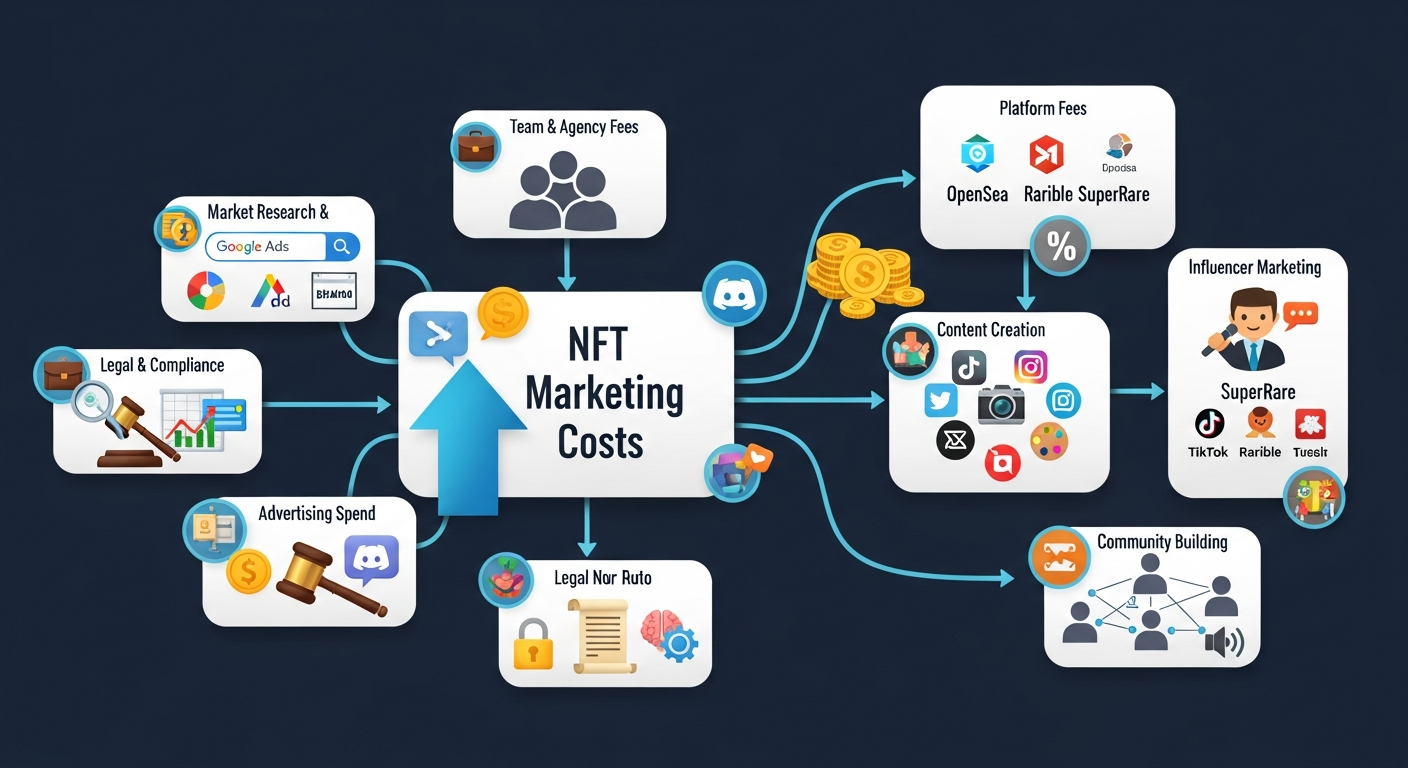
Factors Affecting NFT Marketing Costs
 Project Scope and Complexity
Simple profile picture (PFP) collections require different marketing approaches than complex gaming NFTs or utility-focused projects. More sophisticated projects demand higher marketing budgets.
Timeline and Urgency
Rush projects or tight deadlines often carry 20-50% premium pricing. Agencies may need to reallocate resources or work extended hours to meet aggressive timelines.
Agency Reputation and Track Record
Established agencies with successful NFT campaigns command premium pricing. Their experience and industry relationships often justify higher costs through better results.
Geographic Location
Agency location significantly impacts pricing. US-based agencies typically charge 2-3 times more than international alternatives, though they often provide better market access and cultural understanding.
NFT Marketplace Optimization Services
Optimizing NFT listings on marketplaces like OpenSea, Blur, or Magic Eden improves discoverability. Services include optimized descriptions, keyword tagging, collection branding, and floor-price strategy. Pricing ranges from $1,000 to $4,000 per marketplace. Marketplace optimization improves visibility during peak trading periods and increases secondary market performance.
Budgeting for NFT Marketing Success
Setting Realistic Marketing Budgets
Successful NFT projects typically allocate 15-30% of their total budget to marketing. For a $100,000 project, this translates to $15,000-$30,000 in marketing spend.
ROI Expectations and Metrics
NFT marketing ROI varies dramatically based on market conditions, project quality, and execution. Well-executed campaigns can generate 3-10x returns, while poor campaigns may fail to cover costs.
Key metrics include community growth rates, engagement levels, website traffic, whitelist signups, and ultimately, sales performance.
Hidden Costs and Additional Expenses
Marketing budgets should account for additional costs beyond agency fees. These include paid advertising, influencer gifting, event costs, and content creation tools. Budget an additional 20-30% above base agency fees for these expenses.
Choosing the Right NFT Marketing Partner
Evaluating Agency Credentials
Look for agencies with verified NFT campaign experience, not just general crypto or digital marketing backgrounds. Request case studies, client references, and portfolio examples specific to NFT projects.
Questions to Ask Potential Partners
Ask about their approach to community building, their influencer networks, their understanding of NFT marketplaces, and their crisis management experience. Understand their reporting processes and communication frequency.
Red Flags to Avoid
Avoid agencies that guarantee specific sales numbers, lack NFT-specific experience, or require large upfront payments without clear deliverables. Be cautious of agencies that can’t provide recent, relevant case studies.
Making Smart Investment Decisions for Your NFT Project

NFT marketing requires careful budget planning and realistic expectations. The most expensive agency isn’t always the best choice, nor is the cheapest option likely to deliver meaningful results.
Start by clearly defining your project goals, target audience, and success metrics. This foundation helps you evaluate agencies and pricing models effectively. Consider beginning with smaller test campaigns before committing to large retainer agreements.
Research potential partners thoroughly, checking their track record with similar projects and understanding their specific expertise in the NFT space. Remember that successful NFT marketing combines creative strategy, community focus, and market timing—elements that require both experience and adequate budget allocation.
The NFT market continues evolving, but strategic marketing remains essential for project success. By understanding current pricing structures and choosing the right partners, you can maximize your marketing investment and build a thriving NFT community.
Conclusion
Frequently Asked Questions (FAQs)
1. How much does NFT marketing usually cost?
NFT marketing typically costs between $3,000 and $25,000 per month, depending on the scope of services, campaign duration, and agency expertise. Basic packages may include social media and community management, while higher budgets cover influencer partnerships, PR, paid promotions, and advanced analytics. Large or enterprise NFT projects may exceed this range due to complex requirements.
2. Is NFT marketing still worth it in 2024–2025?
Yes, NFT marketing remains essential despite reduced hype. The market has matured, making strategy and credibility more important than speculation. Strong marketing helps projects gain visibility, build trust, and attract serious collectors rather than short-term flippers. Well-executed campaigns now focus on long-term value, utility, and community engagement.
3. What is the minimum budget for an NFT launch?
A realistic minimum NFT launch budget is $10,000–$15,000. This typically covers pre-launch hype, Discord setup, basic influencer outreach, content creation, and mint-day promotion. Projects with lower budgets often struggle to generate momentum, while well-funded launches can reduce sell-out risk and build stronger early communities.
4. Are influencer campaigns still effective for NFTs?
Yes, influencer campaigns are effective when influencers are carefully vetted for real engagement and relevant audiences. Micro and mid-tier crypto influencers often outperform larger accounts due to higher trust levels. Poor influencer selection, however, can waste budget and damage credibility, making vetting and alignment critical.
5. Can NFT marketing guarantee sales?
No legitimate NFT marketing agency can guarantee sales. NFT performance depends on multiple factors, including artwork quality, utility, roadmap, pricing, and market conditions. Ethical agencies focus on maximizing visibility, engagement, and demand rather than making unrealistic promises that often signal low-quality services.
6. How long should NFT marketing campaigns run?
Most successful NFT campaigns run for 2–4 months, covering pre-mint, mint, and post-mint phases. Pre-launch builds anticipation, mint-day execution drives conversions, and post-launch engagement protects floor price and long-term value. Short campaigns often fail to establish sufficient trust or momentum.
7. Is Discord management necessary?
Yes, Discord management is essential for nearly all NFT projects. Discord acts as the primary hub for community engagement, announcements, support, and trust-building. Professional moderation prevents scams, manages FUD, and keeps conversations active—directly influencing investor confidence and retention.
8. Do small NFT projects need agencies?
Not always, but agencies can significantly accelerate growth. Small teams may manage marketing internally, but lack of experience often leads to mistakes such as poor influencer selection or weak community strategy. Agencies bring proven frameworks, industry connections, and faster execution, which can offset their cost.
9. What ROI should I expect from NFT marketing?
Well-executed NFT marketing campaigns can generate 3x–10x ROI, though results vary based on market timing and project quality. ROI should be measured not only in sales, but also in community growth, engagement, brand equity, and long-term ecosystem value.
10. Are performance-based pricing models safe?
Performance-based models can work if metrics are clearly defined and transparent. However, many agencies avoid pure performance pricing due to market volatility. A hybrid model—combining a base fee with performance bonuses—is often safer and more sustainable for both parties.
11. What are common NFT marketing mistakes?
Common mistakes include overpaying influencers with fake engagement, neglecting community management, launching without a clear roadmap, and relying solely on hype. Ignoring post-mint engagement is another major issue that often leads to declining floor prices and lost trust.
12. How do I choose the right NFT marketing agency?
Choose an agency with verified NFT case studies, transparent pricing, and realistic expectations. Ask about their Discord strategy, influencer vetting process, crisis management experience, and reporting methods. Avoid agencies that promise guaranteed sales or lack recent NFT-specific results.